
For the past four years, AFRINIC, the Regional Address Registry (RIR) for Africa, has been paralyzed by its legal conflict with Cloud Innovation in the Mauritius courts. The root cause of the conflict was a policy dispute over the inter-regional use of IP addresses. (see this article) Keep that root cause in mind as we wade through the fallout from this policy dispute, because many proposals to “reform” AFRINIC would rekindle that conflict.
The good news is that AFRINIC is alive again. In September 2025 it reconstituted itself by electing a new board. It is now in a position to function.
Rise of SmartAfrica
While AFRINIC was paralyzed, an ambitious organization calling itself Smart Africa stepped into the ICANN meeting circuit. Smart Africa traces its roots to the 2013 Transform Africa Summit, in which 7 African heads of state endorsed a “Smart Africa Manifesto” which called for Africa to promote development by means of ICT and private sector leadership. ICT for development is not a bad idea, but people have been singing that song since 1999. Who cares? In the AFRINIC crisis, however, SmartAfrica found that it could make itself relevant by positioning itself as the agent for the reform of the African IP address registry.
So SmartAfrica came to ICANN looking for money and recognition, and soon the two signed a Memorandum of Understanding. The MoU says the parties will “facilitate the participation of African stakeholders in the Governmental Advisory Committee (GAC),” “enhance the involvement of various stakeholders (e.g., government actors) in the governance of Internet infrastructure,” all in the name of “the multistakeholder model of Internet governance.” The ultimate outcome of this MoU, however, is an attempt to put a council of African Regulators in charge of AFRINIC. So ICANN, which positions itself as the ultimate manifestation of bottom-up governance by nonstate actors, and which fought for years to rid itself of political oversight by the U.S. government, is supporting Smart Africa, an organization that promotes digital sovereignty, has a board composed of heads of state, and issues rhetoric that calls for political oversight of its Regional Internet Registry.
This is creating a bit of a scandal, so once again, AFRINIC is the center of the Internet governance world’s attention. Poor AFRINIC.
African Internet Community Objects
Notably, it was Africans who first brought this to the world’s attention. Kenyan Alice Munyua, formerly an Internet Society trustee and ICANN GAC chair, wrote that Smart Africa was pushing for “a new layer of governmental and regulatory authority positioned above AFRINIC’s elected board.” Her post was based on the work of Amin Dayekh, a Nigerian network engineer, who asserted that Smart Africa’s plans for AFRINIC introduces a “top-down intergovernmental layer under Smart Africa” and “creates a dual reporting structure outside AFRINIC’s member oversight, merging political and technical functions.” ICANN’s Noncommercial Stakeholders Group, joined the fray, writing a letter to the Board demanding an explanation of ICANN’s role in this mess.
Both Munyua and Dayekh believe that SmartAfrica tried to get control of AFRINIC’s board in the latest election. They are wrong, but ironically, SmartAfrica itself would like everyone to believe that. They endorsed a slate of board candidates, and all but one of them was elected. Emmanuel Vitus, one of SmartAfrica’s defenders, tells us that it was only SmartAfrica’s involvement in the election that saved the registry. I disagree. It was AFRINIC members who saved the day. The African ISP Association endorsed a slate of 8 candidates and all 8 were elected. The SmartAfrica slate differed from the ISPA slate, in fact, by only one candidate, and the candidate who was not elected, Rodrigue Guiguemde, was the one most closely associated with SmartAfrica. SmartAfrica’s list merely echoed what most ISPA and AFRINIC members considered continental leaders in Internet governance: people like Kenya’s Fiona Asonga and Morocco’s Aziz Hillali.
CAIGA
The real issue here is not Smart Africa’s election endorsements, but its proposed reform: a Council of African Internet Governance Authorities (CAIGA). This proposal would create a pan-African Council with supervisory powers over the regional address registry. SmartAfrica, presumably with the support of its vaunted “heads of state,” would set all this in motion, not AFRINIC members. The power structure is clear, but the details are not; in fact, CAIGA is little more than a set of powerpoint slides at this point, and complaints that it is some kind of detailed blueprint for control are incorrect.
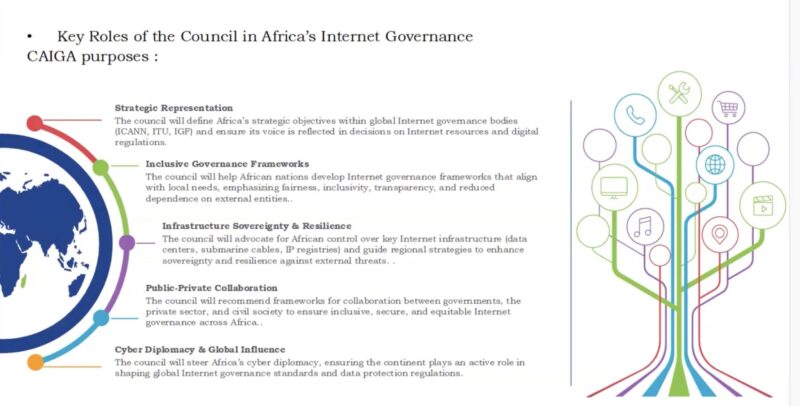
Based on what little we know about it, CAIGA does not address any of the policy or legal vulnerabilities that crashed AFRINIC. In fact, it would make them worse, and add some new ones. Attempting to execute this vague plan now would guarantee another 5 years of instability and paralysis by tossing control of the address registry into a political football game. The “Council” would be an as-yet unformed, totally untested group selected by a board dominated by African heads of state, with unclear powers over registry operations. While all this political jockeying goes on, who is going to actually manage and operate the registry? Subject to top-down governance and second-guessing by politicians and state regulators, how does AFRINIC’s new board learn how to manage the registry properly? What happens to the AFRINIC members – Internet service providers, network operators, corporations – who rely on AFRINIC’s services for the operation of their networks? How well will AFRINIC implement complex routing security technologies (RPKI) under these conditions?
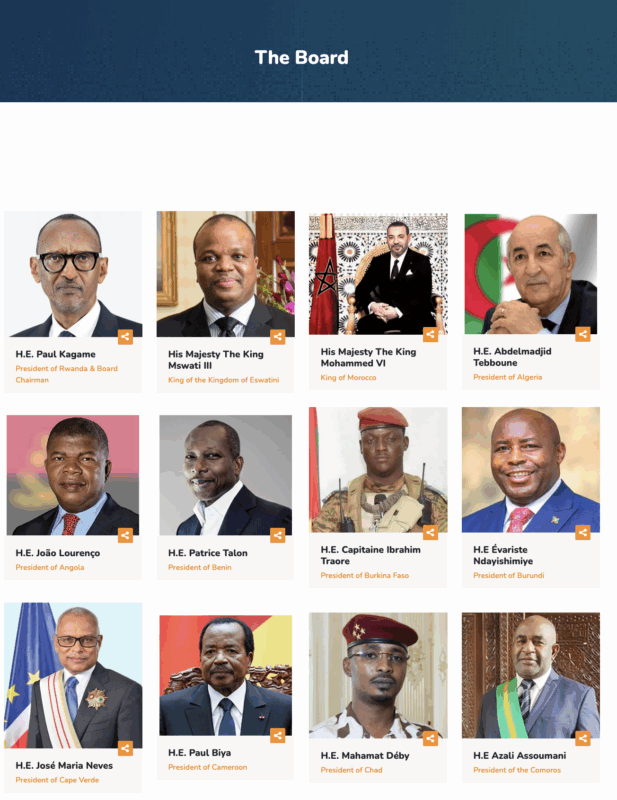
In short, how do calls for digital sovereignty make AFRINIC function better, especially when they are uttered by a uniformed military dictator who has just dissolved his parliament, engineered a coup, or invaded a neighboring territory? If anything like CAIGA happens (and assuming it doesn’t take 15 years to implement), AFRINIC members will have voted in a board that has no power. The registry will not be governed by a member-elected board, it will be governed by a highly political group assembled by SmartAfrica, people who are not network operators and don’t know a subnet mask from a Halloween mask.
ICANN’s Role
ICANN shares a great deal of the responsibility for this debacle. SmartAfrica is systematically working the ICANN meeting circuit to promote its plans and gain support, with the support of the ICANN “engagement” staff, which sees it as something that helps ICANN by giving African governments more power in exchange for their participation in the regime. (The fact that they are all participating already, through the GAC, does not seem sufficient to ICANN, which is worrisome.)
ICANN’s quest for legitimacy and support from governments is undermining its own ethos. It is trying to co-opt nation-states by inviting them into its processes as a partner/client. In Africa, it has a wild, wide-open set of choices as to whom it recognizes as the agents of those nation-states. Who selec…
