Articles & insights
China’s Emerging AI Export Controls: The Dynamics of Digital Fragmentation
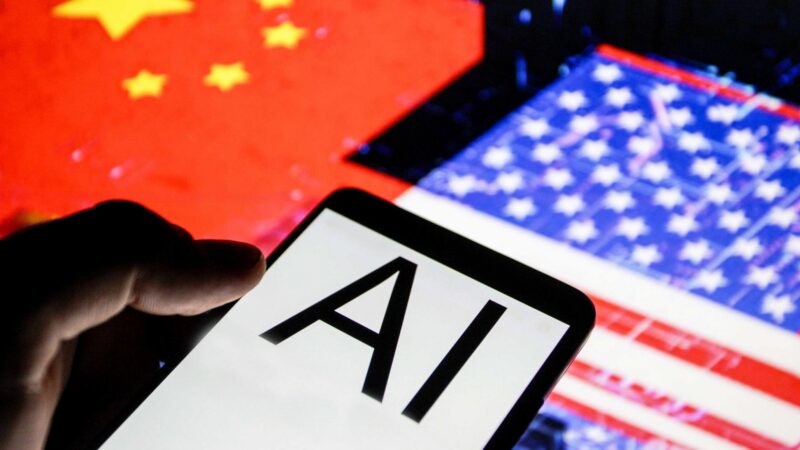
American policy makers think the U.S. can weaponize its leadership in semiconductors, and often imagines the exercise of that power as a unilateral move. It consistently ignores the counter-moves and reactions of other countries in this interdependent digital economy. China, however, is building its own system of export controls, with a different logic.
The Catalogue
On October 16, China’s Ministry of Commerce and Ministry of Science and Technology released draft revisions to the Catalogue of Technologies Prohibited and Restricted from Export (中国禁止出口限制出口技术目录) (the “Catalogue”) for public comment. The draft adds 40 technologies in artificial intelligence (AI), biomedicine, and photovoltaics. Over half of them (23) are AI technologies, specifically large models, AI agents, chip design, large-scale compute clusters, and AI-powered cyber capabilities and information processing.
Is this further evidence of a broader trend of “convergence” between China and the United States, in which both weaponize their positions in the AI stack through export controls? Commentators have noted how China has been learning from and “mirroring” the U.S. Export Administration Regulations (EAR), such as entity lists and foreign direct product rules. The authors of “weaponized interdependence” also argued that Beijing has learned the power of controlling the technology stack as a means of achieving its strategic goals. This argument is most evident in China’s use of its control over the rare earth production network.
At first glance, the convergence argument seems plausible to the new Catalogue. The draft’s technical thresholds restrict the export of large model technologies that meet any of three criteria: 1) training compute of at least 10²⁶ floating-point operations, 2) at least 2 trillion parameters, or 3) capability ranking among the global top 10 at the time of export. The 10²⁶ threshold is the same figure used in the January 2025 U.S. AI Diffusion Rule, which controlled the weights of closed frontier models before the Trump administration withdrew it in May 2025. Similarly, the chip-design provisions share familiar thresholds with the October 2022 U.S. semiconductor rules: 14 nanometers for logic chips, 18 nanometers for DRAM, and advanced 3D NAND.
However, it would be a mistake to read the draft as an aggressive instrument for weaponizing AI advantage. The weaponized interdependence framework relies on a clear assumption: states that control chokepoints in global financial, technological, or communication networks can exert coercive power to serve their strategic goals. China’s rare earth controls may fit that model, but its AI capabilities have not reached the global dominance of their American counterparts. Instead, the draft Catalogue follows a gatekeeping logic. Whereas the weaponization of “chokepoints” projects power outward by exploiting others’ dependencies, “gatekeeping” focuses on the inward control governing the outbound flow of innovative firms, data, and algorithms, and it builds on China’s long-standing data security regime.
China’s export control regime has developed alongside the past decade’s international legal battles over Chinese ICT firms and their technical assets going abroad. The Catalogue has been revised several times, most notably in 2020 as a reaction to the proposal to force the sale of TikTok to U.S. buyers. Beijing added “personalized information push services based on data analysis” as a restricted item, placing any transfer of the recommendation algorithm under its license. The 2026 TikTok U.S. joint venture was eventually blessed with Beijing’s approval. And in April, Beijing ordered Meta’s acquisition of Manus, an AI agent startup of Chinese origin, to be unwound as an attempt to protect its home-grown innovation capacity.
From Data to Models
The draft Catalogue builds on China’s existing data security regime, which guards outbound data flows. The clearest evidence lies in its data-based criteria for large models: the export of models trained on China’s “core data” is prohibited, and the export of those trained on “important data” is restricted. For the latter, exemptions apply to models that use no more than 0.1 percent of such data, where the data does not substantially enhance the model’s capabilities in that domain, desensitization safeguards are in place, and the data is not reproduced in outputs. This manifests China’s strong concern over data leakage: large language models memorize portions of their training data and can be induced to reproduce it verbatim, even in aligned production models. Whether export control can actually address this risk is another question, but these data-based AI export controls build on a long-established regime of data classification and restrictions that started with the 2021 Data Security Law (DSL). The DSL defines “core data” as data bearing on national security, the lifelines of the national economy, important aspects of people’s livelihoods, and major public interests.
In 2022, the Cyberspace Administration of China (CAC) in its Rules on Outbound Data Transfer Security Assessments (数据出境安全评估办法) first defined “important data” as data whose alteration, destruction, leakage, or illegal acquisition or use “may harm national security, economic operations, social stability, public health or security.” Since then, exporting important data has required a security assessment by the CAC. This cross-border data flow regime, in other words, centers on the identification, assessment, and control of critical data with high national security value. The draft Catalogue applies this logic to AI export control for the first time: if the data cannot leave China, neither should a model trained on it. In contrast, U.S. AI export controls have no direct counterpart. The closest U.S. regulation may be the Department of Justice’s restrictions on transactions involving bulk sensitive personal data and government-related data under Executive Order 14117. However, its data categories differ substantially from China’s core and important data, and it operates separately from the AI export control regime.
Why should a model’s training data matter? As noted above, models can reproduce sensitive training data verbatim. That risk concerns two risk scenarios that China’s data security regime has long been concerned with. The first is the leakage of data with national security intelligence value, on which China takes an expansive view: “important data” and “core data” can cover data related to geographical information with political and military significance, broader social-economic conditions, personal information on massive scale, and key infrastructure and industry operations. The second is the leakage of data that could facilitate cyberattacks or remote manipulation of critical systems. In this sense, the Catalogue is concerned with where a model’s data comes from, as well as the national security risks derived from that data, rather than where the model goes and who can use it.
Open Source
The draft’s treatment of open-source technology also shows where Beijing wants to keep the gate open. The draft Catalogue explicitly excludes technologies that have already entered the public domain through open-source or academic publication. For the restricted categories, automatic licensing and other facilitation measures also apply to open-sourcing itself, to Chinese firms building and operating compute centers abroad, to chip tape-outs at international fabs, to international joint research, and to international standard-setting. This exemption is consistent with Beijing’s strategy of strengthening its international advantage in open-source models. Some commentators worry about how long this open stance can last in light of impending AI-enabled cyber risks, and officials reportedly discussed limiting overseas access even to open-weight models in July. However, this draft provides a consistent waiver for open-source models, rather than an attempt to exploit “chokepoints” across the AI stack.
As for implementation, until the Catalogue is finalized, exporters must register each listed technology, its recipient, destination, intended use, and value with the Ministry of Commerce before export. Currently, this requirement is a transitional, information-gathering measure rather than a license. Once the Catalogue takes effect, Articles 29–35 of the Regulations on Technology Import and Export Administration (技术进出口管理条例) stipulate that prohibited technologies cannot be exported, and restricted ones require a license. The Ministry of Commerce and the Ministry of Science and Technology conduct trade and technical reviews and issue a letter of intent before substantive negotiation, and the export contract takes effect only when the license is granted. Unlicensed exports may face fines of up to five times illegal gains or criminal liability. The draft Catalogue also leaves regulators wide discretion: a model’s “top 10” status is judged at the moment of export, and the identification of “core” and “important” data across many industries is still in progress.
The Gatekeeping Instrument
Given all these characteristics, the draft Catalogue is better understood as a gatekeeping instrument: it enables Beijing to know and decide which Chinese models, data, and firms leave, and on what terms, while keeping the gate open for the open-source models that carry China’s reach abroad. This is well manifested in the draft’s interim registration requirement, which covers changes of control to foreign entities. The draft’s public consultation period just closed in mid-November, and more concrete rules are likely to follow in the coming months.
For Washington, it may be tempting to read the draft Catalogue as a “mirroring” escalation of weaponization. But while the Catalogue’s provisions on model and agent capabilities borrow a denial logic from America, the data-based controls on large-model exports extend a long-standing Chinese logic of data sovereignty and security, and they also constitute a cautious move to retain domestically originated AI capacity. Interestingly, the open-source exemption may encourage more Chinese firms to go open-source, strengthening China’s open-source advantage. It will therefore be worth watching how the exemptions change after public consultation.
The post China’s Emerging AI Export Controls: The Dynamics of Digital Fragmentation appeared first on Internet Governance Project.